The Newsletter Welcome That Gives a Reader Somewhere to Begin
A newsletter welcome sequence can show new subscribers what arrives, how often it comes and which issue to open first, without crowding their inbox.
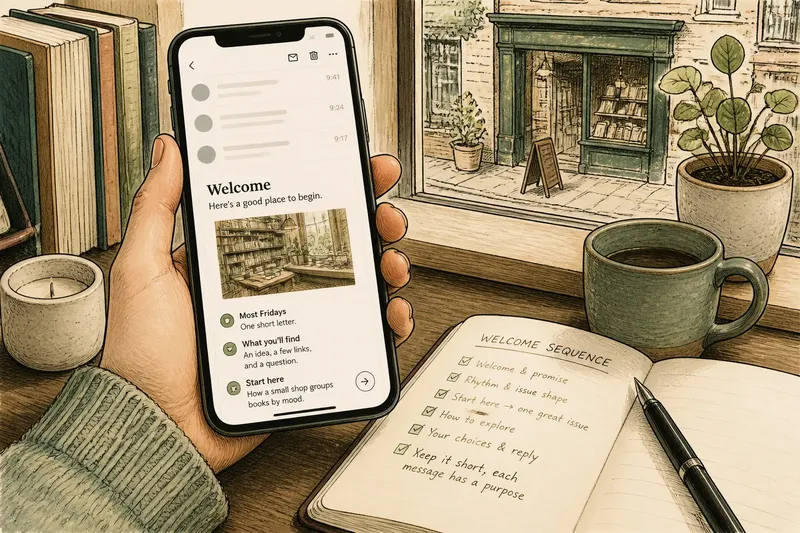
A new subscriber opens your newsletter welcome email on a phone, between other messages, and wonders what they have signed up for. A thoughtful newsletter welcome sequence answers that quickly: what arrives, how often it comes, and where to begin. Its job is not to reproduce your whole archive. It is to give the reader a clear first foothold.
Keep the sequence short enough to feel like a welcome, not an onboarding course. Each message should add a different piece of orientation, with a useful link or next action that makes sense on its own.
1. Welcome the reader and name the promise
Start with a direct thank-you and one plain sentence describing the newsletter’s subject. “I send notes on the small choices that make independent magazines feel distinctive” gives a reader more to hold on to than “Welcome to my newsletter”. Name the territory, not a grand claim about what every issue will achieve.
Then say what a subscriber can expect to receive. If issues bring an essay, a short set of links and an occasional question for readers, describe those parts in ordinary language. This lets someone compare the promise with the message in front of them and decide whether it suits them.
Make the first action simple: invite the reader to open one selected issue, reply with a thought, or save the sender’s address if that helps them recognise future mail. Choose one action rather than presenting a menu of tasks. A welcome is a front door, not a corridor lined with signs.
2. State the rhythm without making it sound like a contract
Readers want to know whether to expect a note every week, a monthly digest, or an irregular letter when there is something worth sending. State the usual rhythm in a way that reflects your actual practice: “Most Fridays, I send one short letter” is clearer than “regular updates”. If the schedule varies, say so plainly.
Explain the shape of an issue as well as its frequency. A note about one central idea, a few carefully chosen links and a short closing question creates a recognisable picture. That picture helps a new subscriber judge whether to read straight away or set the message aside for a quieter moment.
Do not promise a fixed pattern you cannot maintain. A schedule is useful because it helps readers form expectations; an overconfident promise can make every interruption feel like a broken one. If you change the rhythm later, tell subscribers in a regular issue rather than allowing the old description to linger.
3. Give the archive a single, generous starting point
An archive can feel like a library with the labels missing: plenty to browse, but no obvious first shelf. Pick one issue that demonstrates the newsletter’s voice and subject without requiring a long explanation. Link to it with a descriptive title, then add a sentence explaining why it is a good place to begin.
Prefer a representative issue to a personal favourite that depends on context. A reader should be able to understand the piece without knowing your earlier work, your regular contributors or a conversation that took place elsewhere. If the archive includes several strands, choose the one that best expresses the newsletter’s central promise.
Imagine you write a monthly letter about independent bookshops and the decisions behind their displays. Your first welcome could point to an issue about how a small shop groups books by mood rather than genre, with a note that it shows the kind of close observation readers can expect. The link gives the subscriber a concrete sample and a reason to open it, without asking them to explore the entire back catalogue.
4. Help the reader find their way around
If the newsletter has a home page, archive or topic index, explain what each place is for. A short “Browse past issues” link is enough if the archive is straightforward. If readers can choose among recurring themes, point to a page that groups them clearly rather than scattering several unlabelled links through the email.
Use link text that says what will happen. “Read the issue about shop windows” is more helpful than “Click here”, especially when the email is skimmed or read with assistive technology. Keep the number of destinations modest: a welcome message that points everywhere can leave a reader less sure where to begin than before.
Make sure the linked page carries enough context to stand alone. A reader might arrive from a forwarded email, a bookmark or a search result rather than from the welcome sequence. A title, a brief description and a clear route back to the archive help the first issue feel like an intentional beginning, not a fragment.
5. Say what the reader can control
Expectations include the reader’s choices, not only the publisher’s schedule. Explain how to unsubscribe, update an address or change preferences if those options are available. Put the information where a subscriber can find it without making the message feel like a warning label.
If the service offers topic preferences, say what selecting one will change. Do not imply that a reader can customise the frequency or subject if the controls do not support that. Clear descriptions reduce uncertainty and give subscribers a more accurate sense of the relationship they have joined.
A reply invitation can also set a useful expectation. Tell readers whether a reply reaches you directly and what kind of response you welcome, such as a question about the subject or a note about an issue they found useful. Avoid suggesting that every reply will receive a personal answer if you cannot make that commitment.
6. Keep each message focused on one kind of orientation
A short sequence can unfold over a few messages, but each one should have its own purpose. The first can welcome and describe the rhythm; another can introduce the archive’s starting point; a later note can explain recurring sections or invite a reply. This gives the reader room to absorb the information rather than placing every detail in one dense email.
Before adding a message, ask whether it gives the subscriber something not already covered. If two emails both explain the publication’s subject, combine or revise them. If an extra note exists only because the software makes a long sequence easy to build, it may be better left unsent.
Timing should follow the value of the message. A reader needs the basic promise immediately, while a deeper tour of the archive can wait until they have had a chance to open the first issue. Keep the sequence close enough together to feel connected, but avoid a sudden run of messages that makes the welcome itself seem like a campaign.
What should a newsletter welcome sequence answer?
How many emails should a welcome sequence contain?
Use only as many messages as you need to explain the publication, its rhythm and a useful starting point. For some newsletters, one clear email does the work; others benefit from a small number of distinct follow-ups.
Should the welcome email include the latest issue?
It can, if the latest issue introduces the newsletter well and remains useful to a new reader. If it depends on a current event or earlier context, link instead to a more representative archive issue.
When should the first follow-up arrive?
Send it after the initial welcome has had time to be read, and make its purpose different from the first message. A note that helps someone browse the archive is more useful than a second email repeating the same promise.
Can a newsletter welcome sequence invite replies?
Yes, when the invitation is specific and you are comfortable receiving the replies it may prompt. Say what readers might write about, and avoid promising an individual response unless you can provide one.
7. Check the sequence as a reader would encounter it
Read every message in order, not just as separate drafts. A reader may see the first email on a small screen and return to the next one later, so make each message understandable without relying on the previous email being fresh in memory. Reintroduce the newsletter’s name or subject where necessary, without copying the same opening line.
Check the practical details before the sequence goes live:
- Does the first message say what the newsletter is about?
- Is the usual sending rhythm described honestly and plainly?
- Is there one clearly recommended issue or archive starting point?
- Do links have descriptive labels and lead to pages with context?
- Can readers find the available preference and unsubscribe options?
- Does each follow-up add new information instead of repeating the welcome?
- Does the sequence still make sense when read on a phone?
Also check the sequence after the newsletter changes. A new format, a different cadence or a reorganised archive can make old welcome messages misleading. Treat the welcome as part of the publication itself: revise it when the reader’s first experience no longer matches what arrives in the inbox.
A good newsletter welcome sequence gives a newcomer a clear first move and leaves room for curiosity. Keep the promise specific, make the starting issue easy to recognise, and let the reader choose what to explore next. The most useful welcome is not the one that says everything; it is the one that makes the next email feel expected and the archive feel approachable.